Paleomagnetics Lab
The LDEO PAST group can be found at the historic Paleomagnetics Lab in Palisades, New York. Founded in 1964 by Neil Opdyke (1964-1981) and joined a few years later by Dennis Kent (1968-present), the LDEO Paleomagnetics Lab is among the oldest continuously operating paleomagnetism laboratories in the world. Since 2023, Brendan Reilly oversees the operation of the lab.
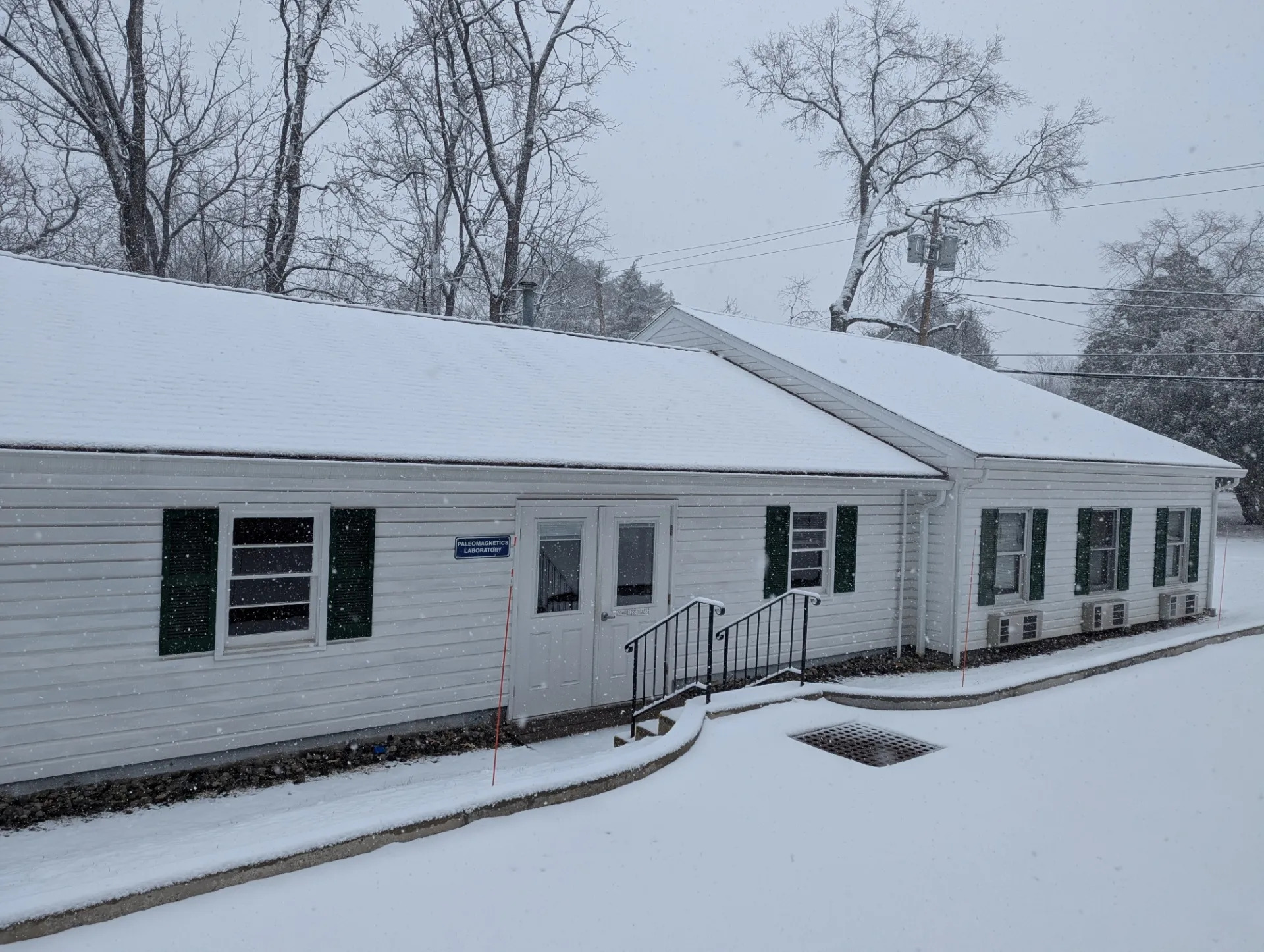
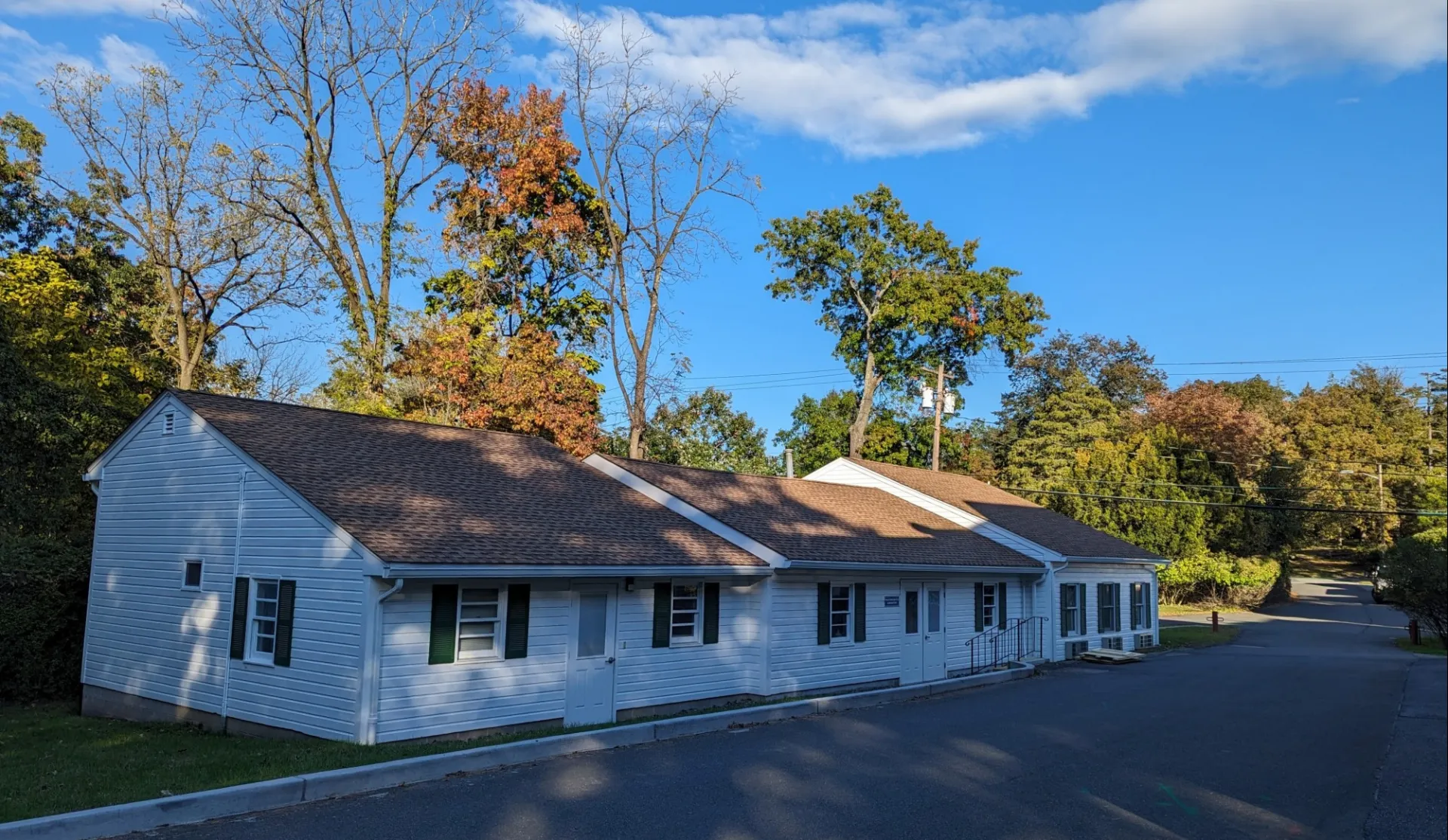
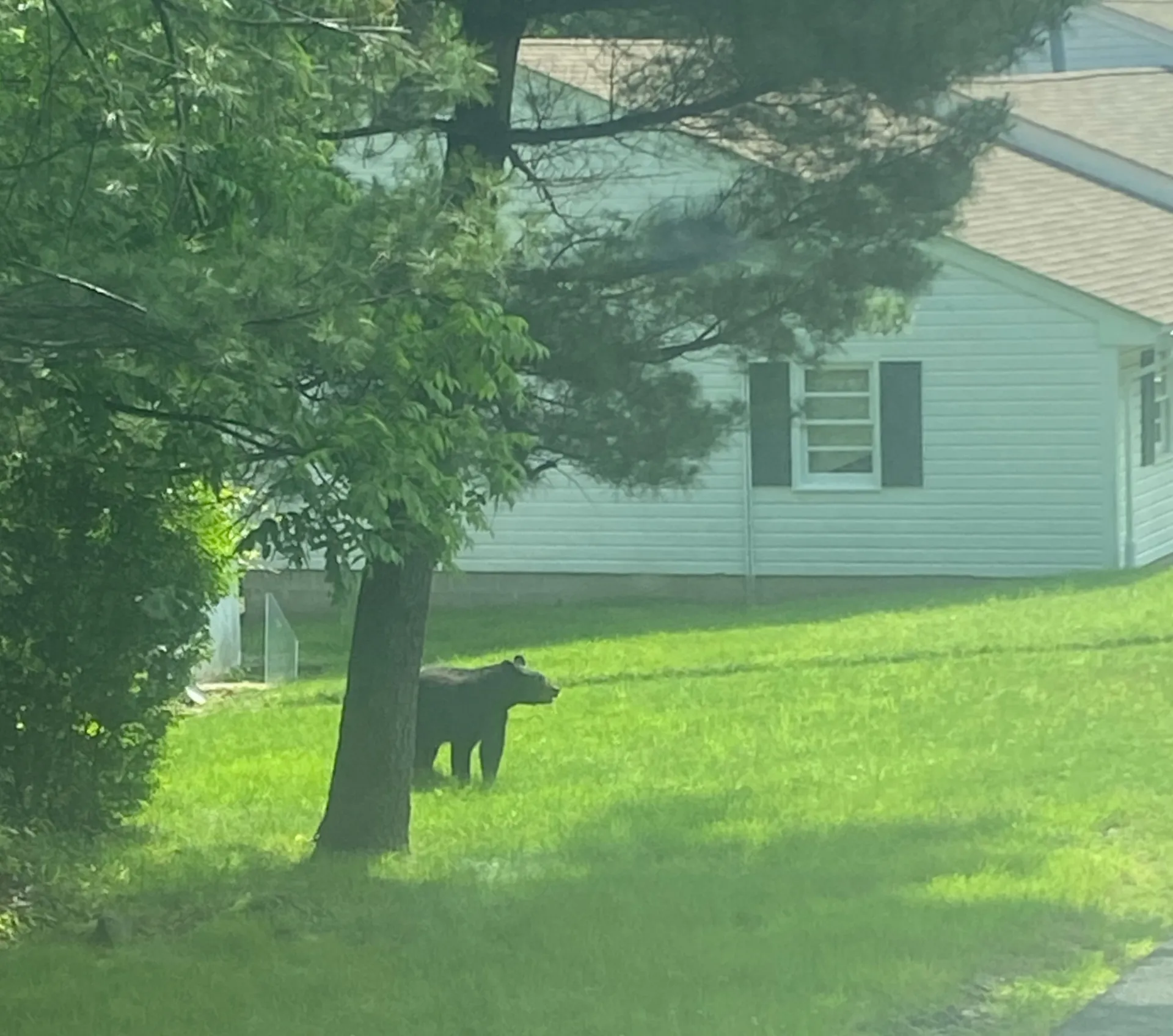
From a humble beginning as the barn where the Lamont family kept their cows, the LDEO Paleomagnetics Lab building is now an ideal place for paleomagnetic research. We are located on Columbia University's Lamont Campus surrounded by world class Earth science researchers and laboratories. The campus is across the Hudson River from New York City on top of the Palisades Sill near hiking trails and scenic views. Today, the building contains offices, meeting area, storage, sample prep space, a rock magnetic (high-field) room, and a 6 m x 3 m x 2 m magnetically shielded room with a low background environment to investigate remanent magnetizations.

LDEO PAST is closely affiliated with the Lamont-Doherty Core Repository (LDCR), which archives more than 20,000 sediment cores, dredge samples, and corals from around the world. The LDCR maintains and operates a sedimentology and core analysis facility with instruments including a Geotek Multi-Sensor Track, an ITRAX X-Ray Fluorescence (XRF) core scanner, benchtop X-Ray Diffraction (XRD), coulometer, particle size analyzer, and sediment washing stations.
Instruments in Shielded Room
Originally housed at ETH Zurich and installed at Lamont in 2025, The LDEO Paleomagnetics Laboratory operates a pulse tube cryocooler (helium free) 2G Enterprises Model 755U Superconducting Rock Magnetometer (SRM) equipped with in-line alternating field demagnetizer coils, anhysteretic remanent magnetization coil, and isothermal remanent magnetization pulse magnetizer. The SRM is capable of very sensitive magnetic measurement along 3 axes using DC Superconducting Quantum Interference Devices (SQUIDs). The sample handler is optimized for 2 cm x 2 cm x up to 150 cm u-channel samples or 8 discrete cube samples.
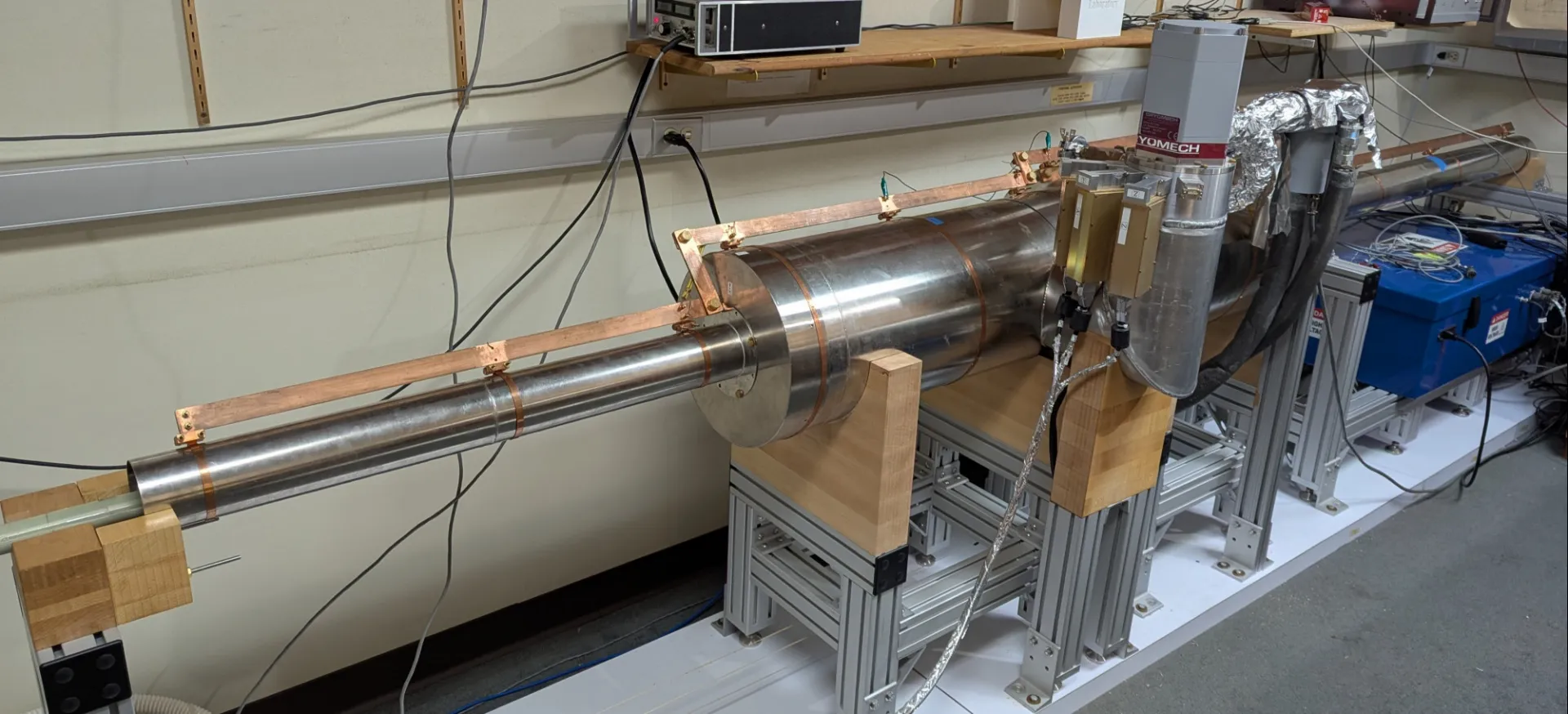
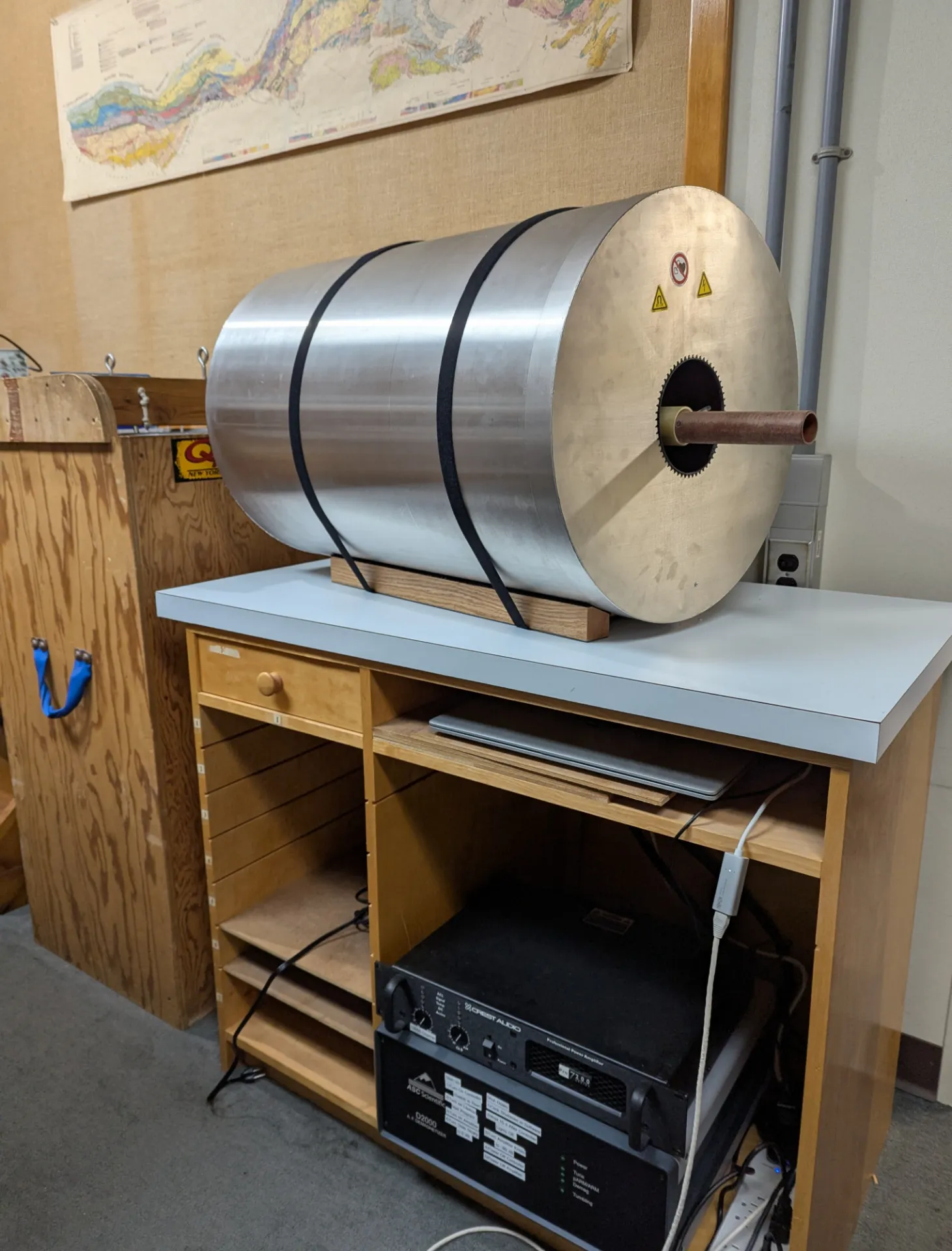
Our ASC Scientific D2000 static AF Demagnetizer is capable of 200 mT peak AF and also has a bias coil for imparting Anhysteretic Remanent Magnetizations (ARM). For special projects, we also have several Schonstedt GSD-1 AC Geophysical Specimen Demagnetizers, including the infamous LDEO custom built large sample AF demagnetizer capable of demagnetizing 36 standard paleomagnetic specimens at a time (peak fields of 50 mT).
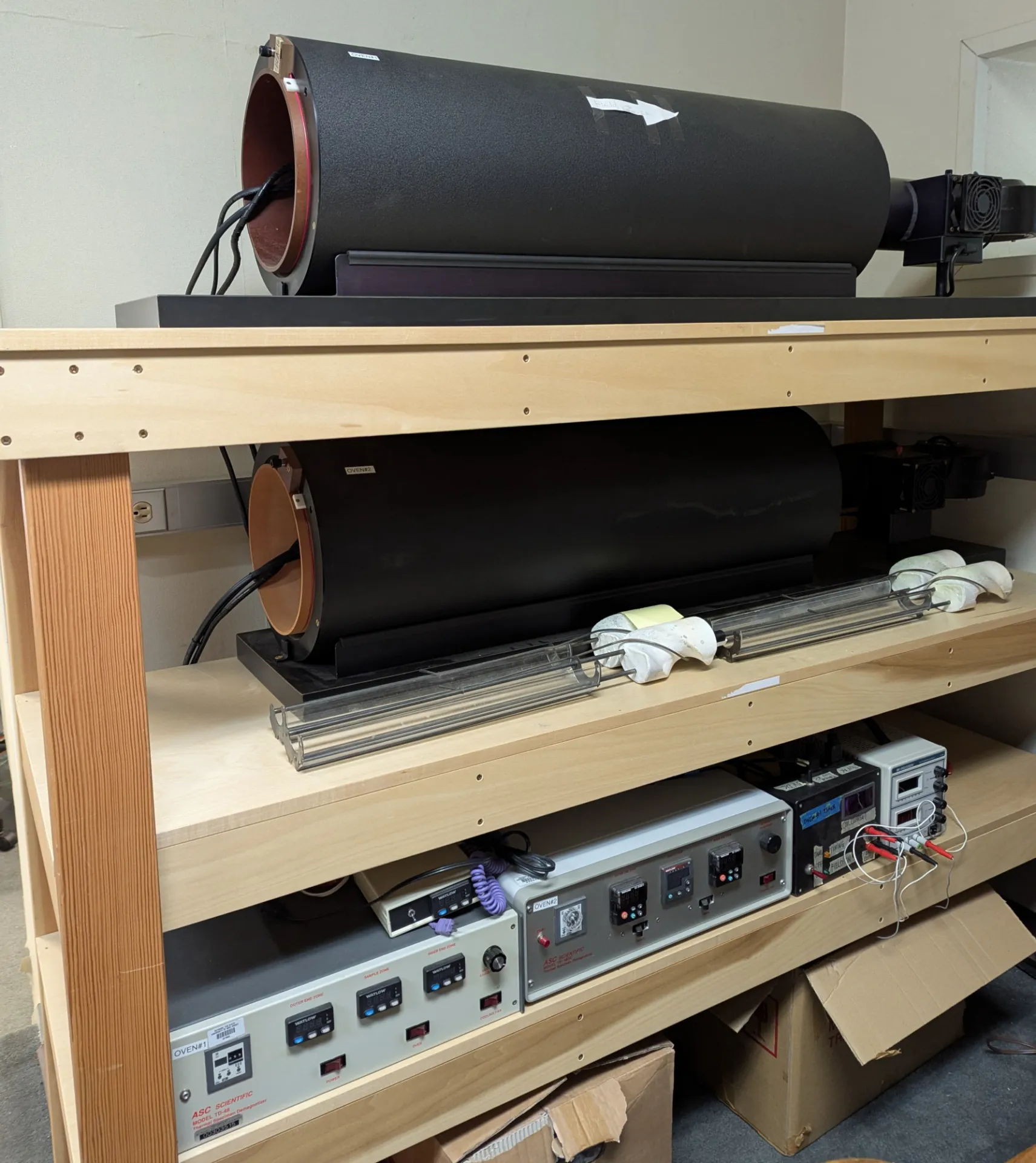
We have two ASC Model TD-48SC thermal demagnetizers that can be used to thermally demagnetize and impart new laboratory thermal remanent magnetizations.
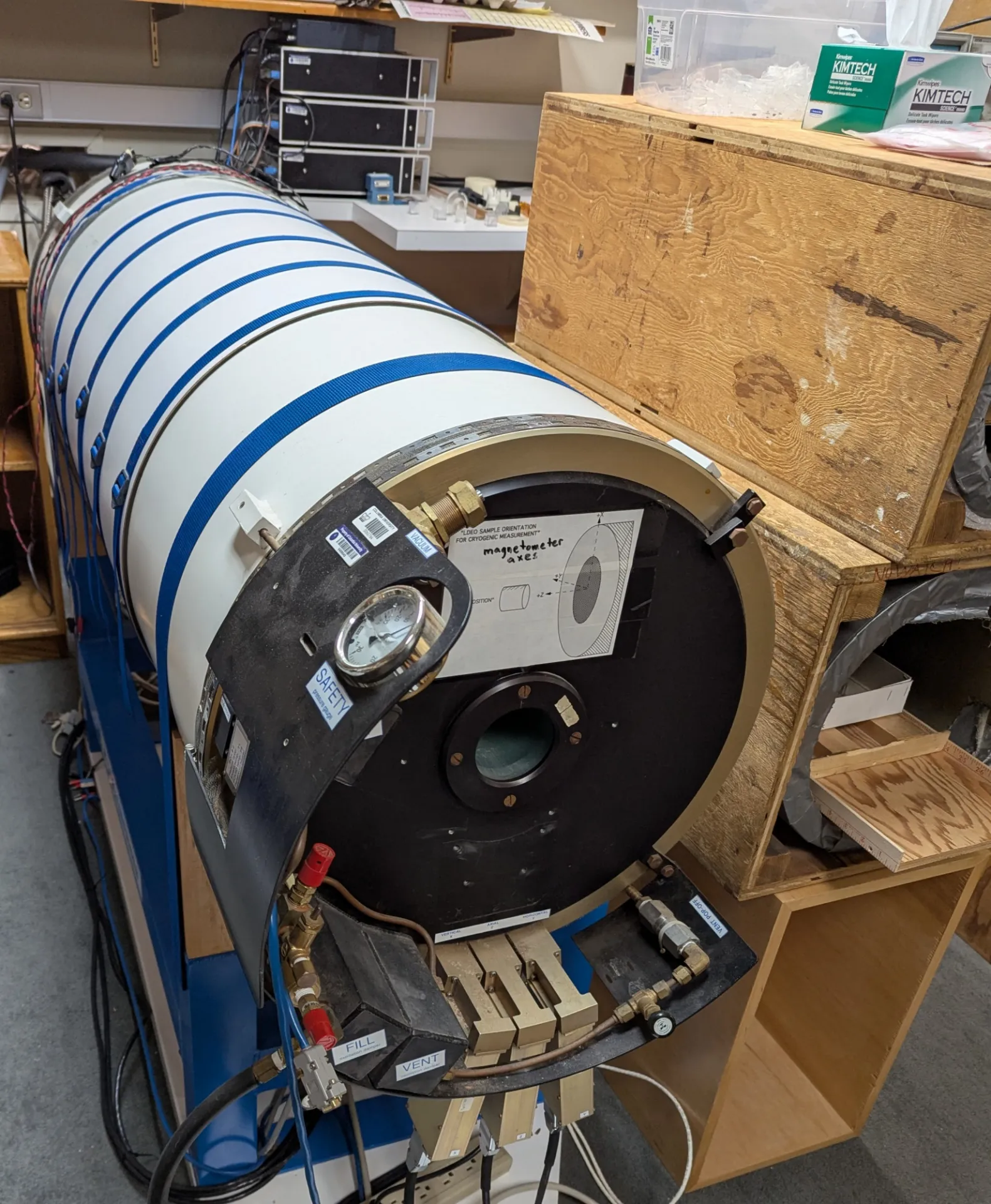
Long the workhorse of the LDEO Paleomagnetics Laboratory, this 2G Enterprises 760-R 3-axis DC-SQUID SRM is currently at room temperature. It is possible to bring this instrument back online for special projects with a little helium and a lot of love.
We also have a variety of other equipment, including Bartington magnetic susceptibility meters, a 3 axis fluxgate magnetometer, Hall-effect magnetometer, and several power supplies.
Instruments in Rock Magnetics Room
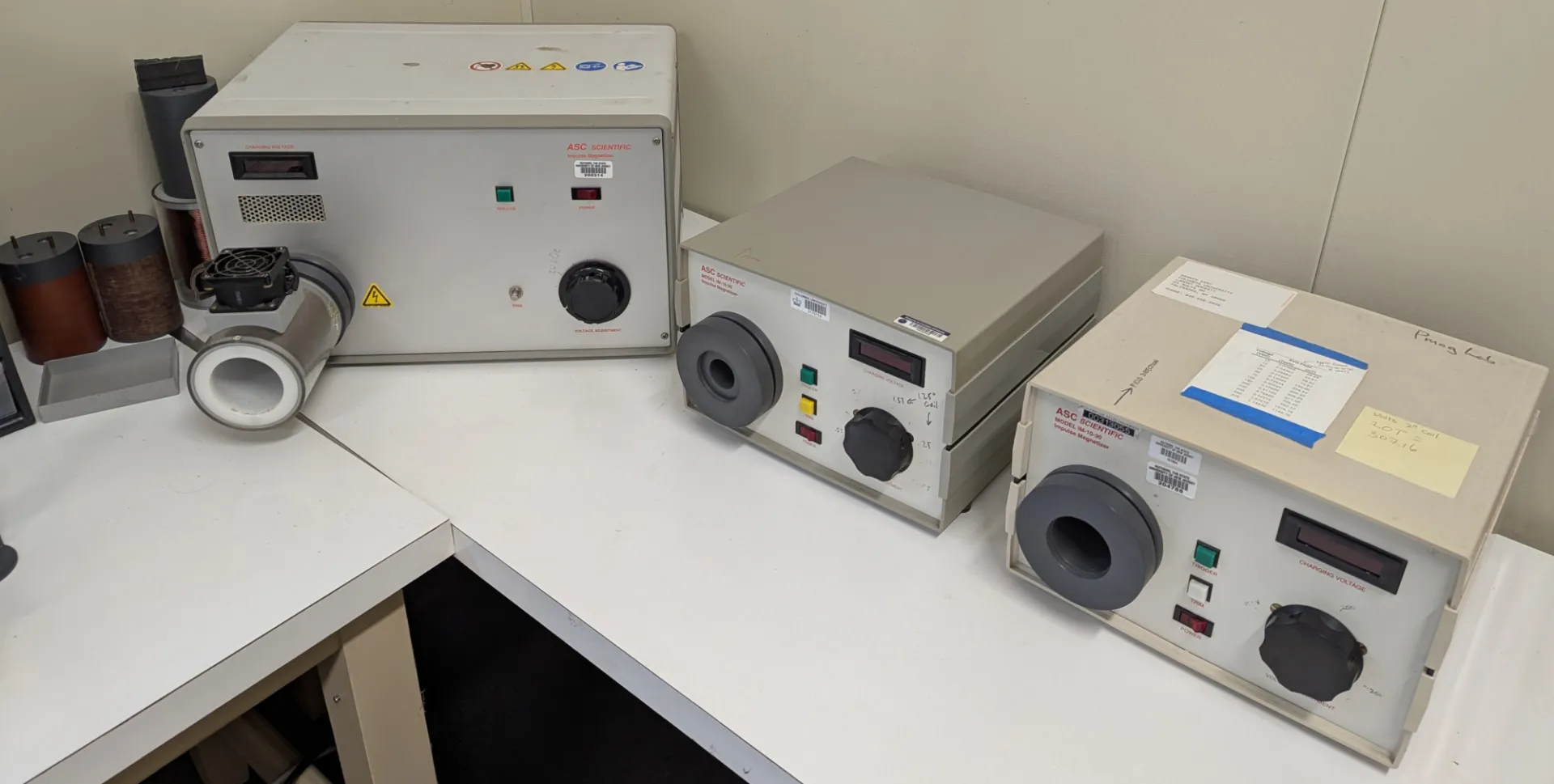
We have several ASC Scientific pulse magnetizers for imparting Isothermal Remanent Magnetizations (IRM), including Model IM-10-30 impulse magnetizers with standard 1.25" and 2" coil diameters and a large volume 2.5" plug-in custom coil capable of 2.5 T fields.
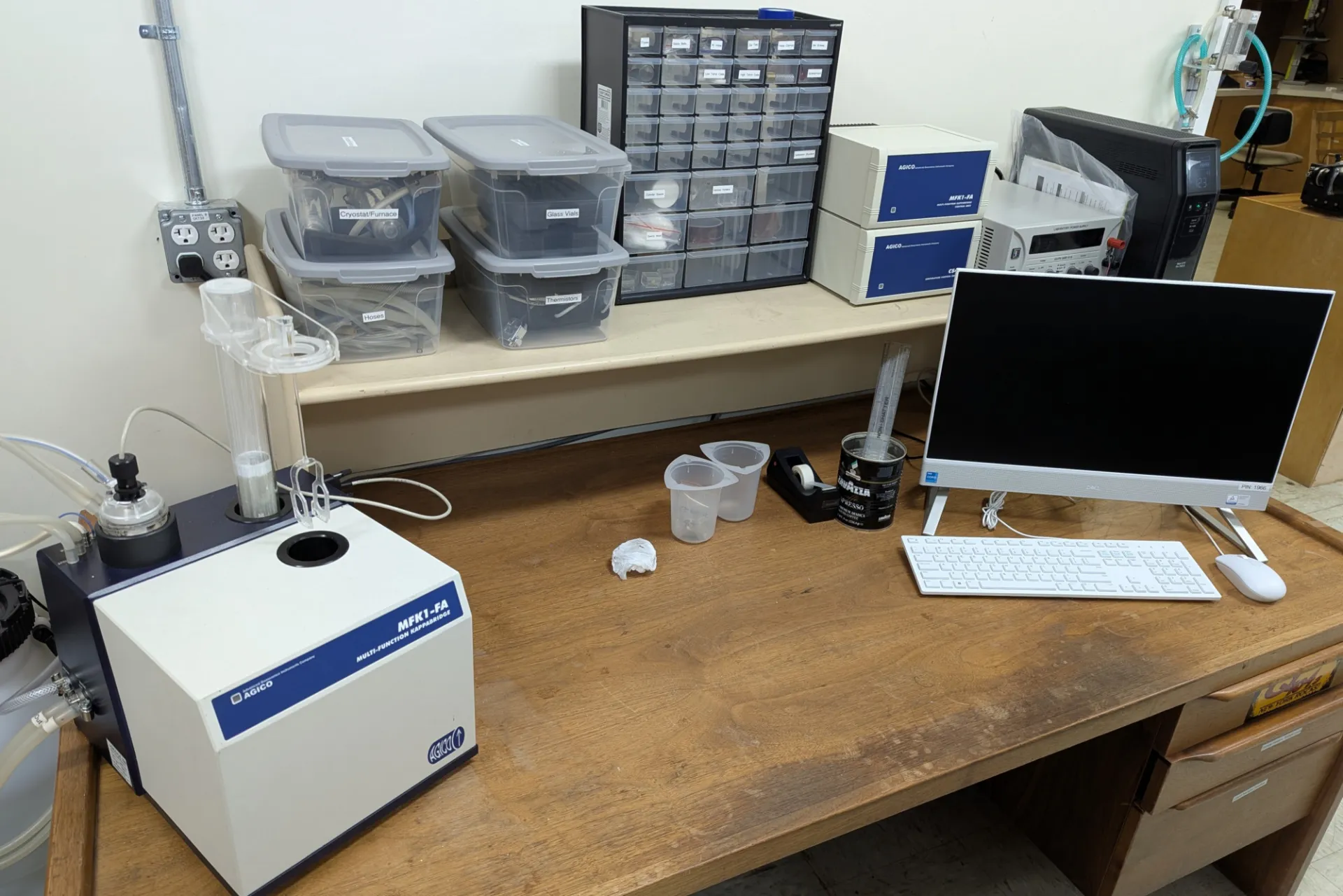
Our MFK1-FA is equipped with a CS4 temperature control unit and can make sensitive magnetic susceptibility measurements of discrete samples, including as a function of field strength, frequency, temperature (liquid nitrogen temperatures up to 700 C), and orientation for anisotropy of magnetic susceptibility studies.
We have several MS2 and MS3 magnetic susceptibility meters and sensors for pass though (MS2C), discrete sample (MS2B), and point (MS2E MS2F) measurements. Automated split core and whole round core measurements can also be made using the Geotek Multi Sensor Track at the Lamont-Doherty Core Repository.
We have or have access to a drill press, diamond cut off saws, band saw, hydraulic press, balances, and other sample preparation equipment needed for paleomagnetic and rock magnetic studies. We also have a Bambu Labs 3D printer for custom designed parts.