Pliocene-Pleistocene Variability of Weddell Embayment and Antarctic Peninsula Glaciation
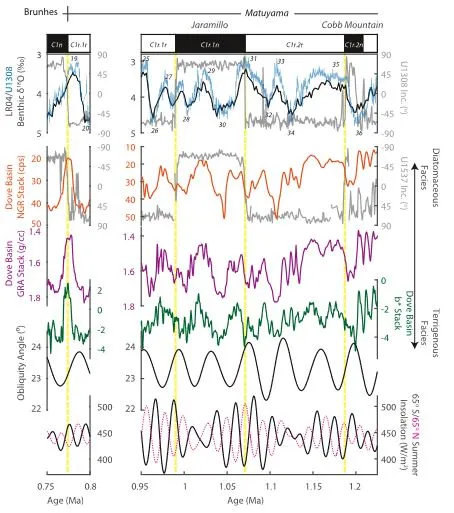
The potential for future sea level rise from melting and collapse of Antarctic ice sheets and glaciers is concerning. We can improve our understanding of how water is exchanged between Antarctic ice sheets and the ocean by studying how ice sheets behaved in past climates, especially conditions that were similar to or warmer than those at present. During International Ocean Discovery Program (IODP) Expedition 382, we joined an international and interdisciplinary team of scientists to drill several holes in deep sea contourite deposits of the Scotia Sea near Antarctica to study Antarctic Ice Sheet evolution and Southern Ocean dynamics through major climate transitions spanning the relatively warm Pliocene epoch to the high amplitude ice age cycles of the Pleistocene epoch. One of the sites, Site U1537 from the Dove Basin, recovered an exceptional 3.3 million year long records that we are pretty excited about. The Site U1537 drill cores had excellent recovery, a well-defined paleomagnetic reversal stratigraphy, and strong cyclical changes in its lithology.
One of the projects we are working on is a collaborative effort between seven US institutions to document Antarctica's response as Earth transitioned from the warm Pliocene to the growth of large Northern Hemisphere ice sheets around 2.6 million years ago by combining marine and land evidence for glacier variations from sites near the Antarctic Peninsula, complimented by detailed work on timescales and fossil evidence for environmental change. The LDEO PAST group is working to develop a high-resolution paleomagnetic age model around this time to better constrain the timing and pacing of climate changes. An important goal is to test whether Antarctica's glaciers changed at the same time as glaciers in the Northern Hemisphere as Earth's most recent Ice Age intensified, or alternatively responded to regional climate forcing in the Southern Hemisphere. Our paleomagnetic age model will provide new insight to this question.